Showing posts with label Historical Fiction. Show all posts

Friday, 2 August 2013

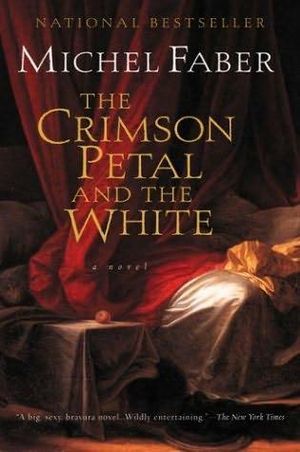
The Crimson Petal and the White - Competition!

Title: The Crimson Petal and the White
Author: Michel Faber
Pages: 833 (paperback)
Published: September 11th 2003
Published by: Canongate

Sugar, an alluring, nineteen-year-old prostitute in the brothel of the peculiar Mrs Castaway, yearns for a better life. And when she is visited by William Rackham, the somewhat reluctant heir to Rackham Perfumeries, she begins an ascent through the strata of 1870's London society that offers us intimacy with a host of loveable, maddening and superbly realised characters.

Gripping from the first page, this hugely acclaimed novel is an intoxicating and deeply satisfying read - not only a wonderful story but the creation of an entire, extraordinary world.


Sugar is a 19-year-old prostitute in 1870s London. She is attractive in her unusualness. Tall and slender, with an almost boyish figure, at a time when petite, more rounded women are coming into fashion. She defies norms in other ways, looking after herself in ways which are day-to-day now but odd for the time, and is incredibly widely read.

It is all these things are more than make her so desired. Especially by William Rackham, who relishes having someone he can converse with and who agrees with his opinion on so many things, someone who seems so business-minded at a time when he needs it most. For he cannot rely on his wife, Agnes, in these testing and trying times, a woman who is seemingly half-mad. It is with the meeting of these two people that Sugar begins her ascent away from being a prostitute, and resulting in everybody's lives being changed in ways unimaginable at the start of the tale.

This book weaves a tale which, while not engrossing - indeed, it took me a good three weeks to get through - is interesting, compelling. I wanted to find out how high the highs went, and whether they would be sustainable or whether all would come crashing down. Faber utilised an unusual writing style, one which I hadn't come across before - you're addressed by a phantom tour guide, as a phantom yourself. You're described as following people around and told when to leave one person and go to another, quite frequently at the start of the book when the characters are being introduced, then rather less frequently as the story progresses. It was an unusual breaking of the fourth wall, but it worked.

Sugar is as compelling on paper as she seems to be in reality, and the changes she goes through over the course of the book are multitude and believable - grounded in what's going on around her and the situations she finds herself in. I thought the story was going to be more about her than it was, and was always eager to get back to her sharp mind when we were following other characters, but there were no story lines in this intricate tapestry of interconnecting lives that I didn't like.

All the best characters are probably the female ones, and Agnes was always particularly interesting to read about, her view of the world being skewed so easily and providing for unusual views of the most ordinary things. On top of this, Sophie was truly endearing, and though she only really features in the latter parts of the book I enjoyed her interactions with Sugar and the small views we got of her father in the little times we spent with her.

Aside from the slight lack of oomph which would have kept me reading, the end of this book was left very open, and I'll admit to being a little unsatisfied. I need a more concrete sense of finish than what was provided. I don't mind if everything isn't neatly tied up in a package with a pretty bow, but the ribbon was still in the drawer and nowhere near the package at the end of this book.

Overall, a very readable book which I would easily recommend, though given the nature of the book some of the language leaves it unsuitable for younger readers.


If you would like to win this book (in a good condition) just leave a comment below. I'll leave it open for two weeks and then randomly select a winner! Open internationally.

Tuesday, 21 August 2012

The Song of Achilles

Title: The Song of Achilles
Author: Madeline Miller
Pages: 368 (paperback)
Published: April 12th 2012
Published by: Bloomsbury Publishing PLC

Patroclus, an awkward young prince, has been exiled to the kingdom of Phthia. Here he is just another unwanted boy living in the shadow of King Peleus and his golden son, Achilles. Yet one day, Achilles takes the shamed prince under his wing. As they grow into young men their bond blossoms into something far deeper — despite the displeasure of Achilles's mother. When word comes that Helen of Sparta has been kidnapped, the men of Greece are called upon to lay siege to Troy in her name. Seduced by the promise of a glorious destiny, Achilles joins their cause. Torn between love and fear for his friend, Patroclus follows Achilles into war, little knowing that the years that follow will test everything they have learned.

This story is set around the time of the Trojan war - about 3200 years ago. Greece was just a series of small, independently ruled kingdoms, and they waged war on the heretofore unbeaten city of Troy. Here we see the story of Achilles as he grows up and fights in this war. There are gods, goddesses, demi-gods and centaurs abounding in his journey with his best friend Patroclus.

I wasn't really sure what to expect from this book. What I knew about Achilles before reading it can be summed up in two (very short) sentences: Fabled warrior who fought against Troy when Helen ran away with Paris from whom the phrase 'Achilles heel' was taken. His heel was apparently his only vulnerable spot after his mother dipped him in a river giving him immortality, but held him by his heel as she did so.

Literally, this is everything I knew about Achilles before I started reading, most taken from the film Troy, and quite a lot only a myth - I doubt that he was immortal or a half-god. He was just a great warrior and myths abounded about him at the time.

This story is about Achilles, but less about his life than about his life with Patroclus. It is Patroclus who we first meet, and through whom we see Achilles. They pretty much grow up together from when they meet at age 10, and their relationship is definitely something wonderful.

Miller has obviously done her research - and as a lecturer of Ancient Greek you'd definitely hope so too - and seems to the know the story as it is recorded very well. The personalities of all the characters come through clearly, and there is always some level of logic to their actions. There is a lot of ancient Greek pop culture/mythology stuff thrown in there, but you never feel overwhelmed by it. Stories are told to demystify characters which would have been household names at the time, and gods and mythological creatures get the same treatment without unnecessary depth.

It covers a rather hefty length of time, 28+ years all told, but it skips over the unimportant parts very quicklys and focuses on those times where things actually happen, and all in all is written in a way which was very easy to read. I can't really pinpoint why, but I never had to work at reading it particularly. No, it wasn't the most gripping book in the world, but it was interesting and there were some places where it was definitely a page-turner.

As I said before, this book is really all about Patroclus and Achilles. It is wonderful seeing them grow up together and grow closer through their life together, and the end is a little bit heat-breaking. The depth of their feeling for each other is wonderfully portrayed, even if there is some question as to the exact nature of their relationship in actuality. You can see the ways in which they help each other, how they help each other to be better in so many ways and how they are utterly devoted to each other.

An interesting book, and something I'd easily recommend.


Saturday, 14 April 2012

Pure

Title: Pure
Author: Andrew Miller
Pages: 342 (paperback)
Published: January 5th 2012
Published by: Sceptre

Paris, 1785.
A year of bones, of grave-dirt, relentless work. Of mummified corpses and chanting priests. A year of rape, suicide, sudden death. Of friendship too. Of desire. Of love...
A year unlike any other he has lived.


Deep in the heart of Paris, its oldest cemetery is, by 1785, overflowing, tainting the very breath of those who live nearby. Into their midst comes Jean-Baptiste Baratte, a young, provincial engineer charged by the king with demolishing it.

At first Baratte sees this as a chance to clear the burden of history, a fitting task for a modern man of reason. But before long, he begins to suspect that the destruction of the cemetery might be a prelude to his own.


Jean-Baptiste Baratte is an engineer. His first proper job - digging up the cemetery of Les Innocents and knocking down the church there, cleansing it and the surrounding area of Paris namely of the smell. He moves in with a family and sets to work, building new relationships with those he meets on the job and in the area and resurrecting old ones to get it done.

This is another book I'm reading for my book club, and in all honesty one I didn't really want to. I (generally) know what I'm going to like, and historical fiction is not it. Especially when it is centred around a graveyard being dug up. Decomposing bodies...not my idea of a great read. So, I went in with quite low expectations and not expecting to enjoy it at all.

And while I didn't particularly enjoy it, neither did I dislike it. My opinion of this book is just a bit, meh. It wasn't bad, but there wasn't anything to grab my attention. Actually, that's not quite true. There was one event which was quite a surprise, and the result of which piqued my interest. First thing to note: I love language. It absolutely fascinates me. So when a bash around the head means one of the characters begins to forget the names of certain objects (aphasia) I was all like 'ooh! This is going to be interesting!' Unfortunately, this only lasted in any real capacity for like a chapter so my interest dropped off again quite quickly when I realised it wasn't really going to be a present aspect of the story any longer. The bits where they were actually digging up the mass graves which made up most of Les Innocents was also quite interesting, but this for the most part wasn't the focus of the story so there were appearances of what they were doing and how, but nothing all that substantial.

The story itself was alright. A fair portion of it was Baratte organising stuff and people, and there were some allusions to social uprising, but given that this taking place just a few years prior to the French Revolution I expected there to be slightly more of this stuff. Especially given the fact that Baratte considers himself something of a philosopher, as does his new friend Armand.

There are several secondary characters, but I didn't feel you really got to know any of them at all. They were all there to serve a specific purpose, and past this I didn't think they had any real depth. Armand was the revolutionary, Marie the nosey servant, and there are others whose purpose I can't really name without spoilers. Even Baratte is a bit like this: he is an engineer, and there doesn't seem to be much else about him that I could particularly see. Yes, there are hints of philosopher and revolutionary but nothing more than hints.

Overall, not a bad book but not a great one either in my opinion.


Wednesday, 14 March 2012

The Sisters Brothers

Title: The Sisters Brothers
Author: Patrick deWitt
Pages: 325 (paperback)
Published: January 5th 2012
Published by: Granta Books

It is 1851, and a lust for gold has swept the American frontier. Two brothers - the notorious Eli and Charlie Sisters - are on the road to California, following the trail of an elusive prospector, Hermann Kermit Warm. On this odyssey Eli and his brother cross paths with a remarkable cast of characters - losers, cheaters, and ne'er-do-wells from all stripes of life - and Eli begins to question what he does for a living, and whom he does it for.


Eli and Charlie Sisters are notorious killers and renowned gun-slingers working for The Commadore. He sends them off to kill a man who has stolen something from him and so they begin to journey from Oregon City to a California in the grip of the gold rush. Eli narrates their adventures as they make the trip and track down their man, with their fair share of misfortunes along the way.

I'm reading this book for my book club, and it's isn't really something I would have picked up myself. I'm not really into Westerns, and at its core this is what this book is. For all that though, I did quite enjoy it and it was an easy enough book to read, for the most part. The chapters whiz by, though the two Intermissions are a bit weird, and I don't really see how they fit into the rest of the book. There were also a couple of instances where I had to go back and reread paragraphs because it was a little unclear what was going on, but for the most part the writing was good, if not overly descriptive. Though having said that, Eli doesn't really strike me as the descriptive type so it kinda makes sense that there isn't that much included in his narration of the events.

There is a dark side to it, with the brothers killing their way down to California and the unavoidable accompanying icky bits - the one that comes to mind being Eli standing on the head of a man his brother had just shot in the head and some 'lovely' accompanying descriptions... They killed so many people I lost track, and I get that that's what they do and things were different in that time and place but I still in places didn't like it. But for all that the violence wasn't gratuitous. It fit with the characters and you really do feel that that is just the way they react to things.

This holds particularly true for Charlie who seems the more trigger happy of the two, maybe contributing to me liking him less than Eli. He was mean and selfish, always wanting to get his own way and bulling on regardless of other people, and you do get the feeling that sometimes Eli doesn't really like him. Eli, on the other hand, had something of this in him but you kinda get the feeling he would have been a good guy if it hadn't been for his brother. He does what he can to help a few people and tries to be kind, but there is always that mean streak waiting for the slightest opportunity to leap out. And they have quite a typical sibling relationship - they bicker and they argue, but they're still there for each other no matter what.

The pacing was good, and you were never to long between events, though some of them are a bit random and never really get explained - very reflective of real life I suppose; you don't always find out the endings to things you come across. The ending is weird, in that it's both happy and sad. I couldn't quite decide which feeling was predominant come the end of the book as there are aspects of both. I'm glad Eli and Charlie ended up where they did, but sad about the events leading up to it and what it took to get them there.